
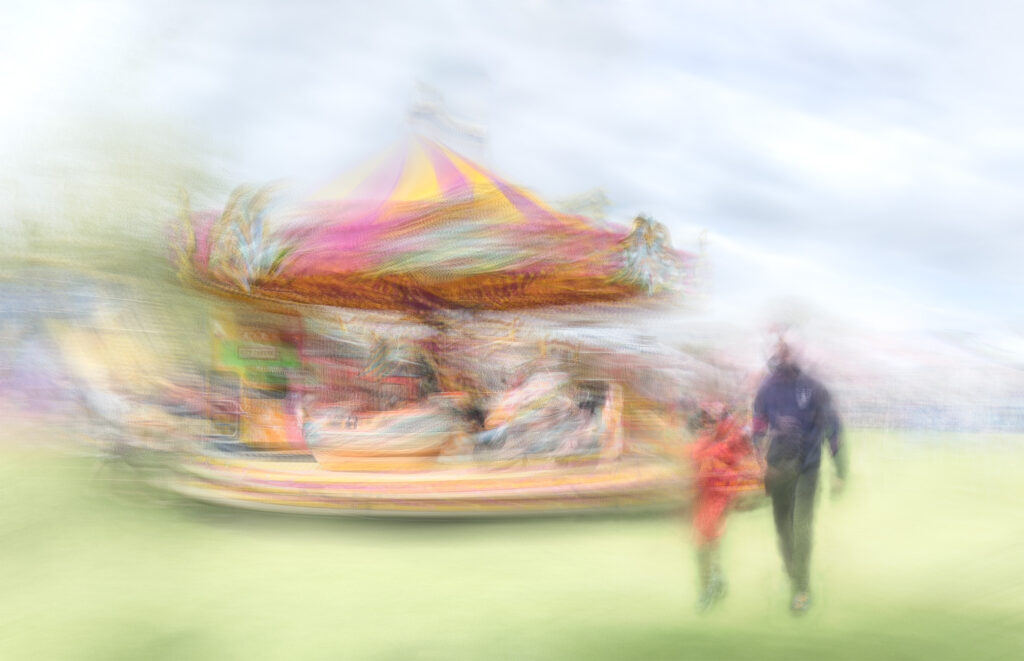
I’m often asked if my images are multiple exposures or ICM (Intentional Camera Movement), and the answer is—in many cases—they are both.
Multiple exposure is really just a generic term for any image that includes more than one exposure or shot. You can create these in-camera…
I’m often asked if my images are multiple exposures or ICM (Intentional Camera Movement), and the answer is—in many cases—they are both.
Multiple exposure is really just a generic term for any image that includes more than one exposure or shot. You can create these in-camera…
My old Fuji XT-1 can do a ‘double exposure,’ which means it stacks one shot on top of another—I click for the first shot, reframe, click again, and it blends the two automatically. This older camera doesn’t offer blend modes.
My Fuji XT-4 can stack up to 9 multiple exposures, with 4 blend mode options.
It doesn’t matter if my first shot was an ICM; I can reset ISO, aperture, and shutter speed on both cameras for the second (and subsequent) shots. So the final result might be one ICM plus multiple “straight” shots, all ICMs, or all straight shots.
What your camera can do will depend on the model. Some cameras can stack far more than 9 exposures, and some allow saving the result as RAW files while others only create JPEGs.
What’s the difference between a multiple exposure and a composite then?
Honestly, before anyone calls me out—there’s no strict “right or wrong” here. It’s largely semantics.
But, here’s how I personally separate the two:
A multiple exposure (ME) is usually a set of shots taken at the same moment or location, layered together to create a single image where the elements naturally interact. These can be created in-camera or digitally, but the key is that the images blend as if they were captured simultaneously. You might use MEs to create abstract or ethereal effects, or simply to blend different aspects of a scene—somewhat like stacking images for creative purposes.
Multiple exposures are like layers of a dream, where moments and movements gently fold into one another,
A composite, on the other hand, is typically a constructed image made by combining distinct elements from different shoots, or even from different times and places—like taking a landscape from one photo, a cow from another, and a sky from yet another. These elements don’t naturally coexist but are brought together deliberately to create a new scene, often reflecting the photographer’s imagination and creative vision.
So, to sum up, a composite is like a patchwork quilt stitched from fragments of different times and places, woven together by your creative vision.
It’s probably also worth nothing, photographers’ approaches to MEs and composites differ from digital artists, who often work with stock images.
Ultimately, it’s all about artistic freedom and self-expression—and there’s nothing wrong with any of it.
Or to put it better: there’s everything right with it. You’re an artist expressing yourself—that’s fantastic.
The only problem arises when a place or thing is presented as something it’s not—for example, suggesting an image is your photography when it actually comes from stock, or implying that a place or moment existed when it didn’t.
In essence, I explain it to myself this way: multiple exposures merge moments or scenes that belong together naturally, while composites assemble separate parts to build something new and imaginative.
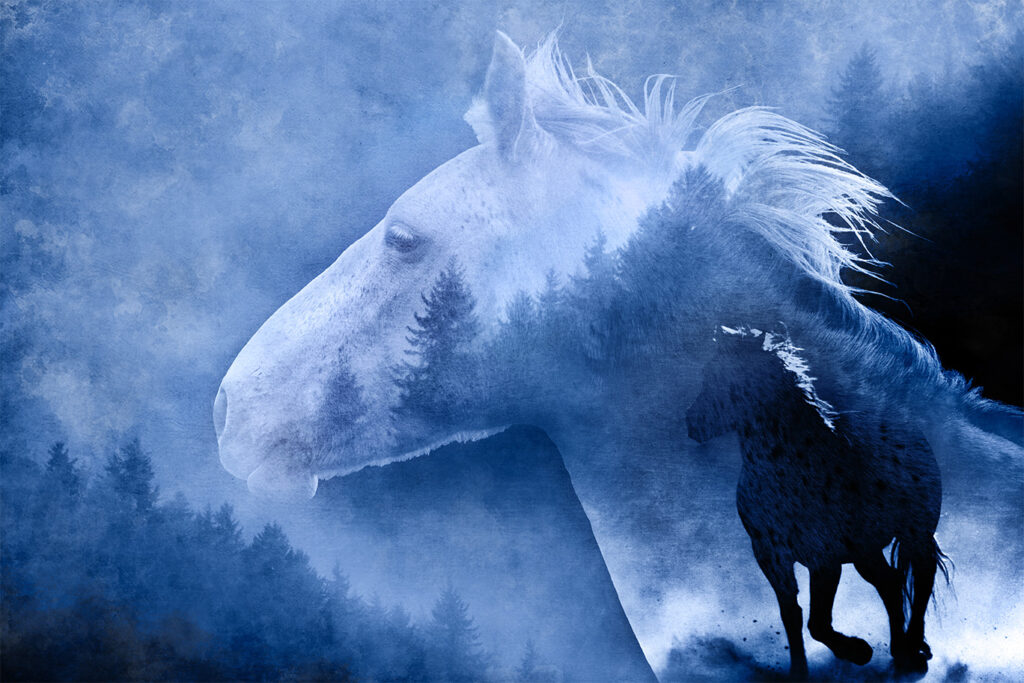
TIP: Creating something from stock images can be great practice. This piece is a four image composite/digital art created for teaching how to produce multiple exposures in photoshop as either ME or composites – it is created using stock images to demonstrate and teach blending techniques. It’s fantastic practice and how I honed my own skills (and still do)…
Sometimes you need to practice or have a fabulous conceptual idea but don’t have the images to execute it—using stock sites can help. There’s no need to make life difficult by trying to shoot something like a field or fence or waiting for horses to line up perfectly.
Honestly, for me, the magic of a photograph lies in its soul—the honest imprint of a moment lived. Ninety-nine percent of my finished work is mine—I’m a photographer and love what I do. But, there’s absolutely nothing wrong with being a digital artist – that’s a whole different ball game and there are some incredible talents around doing that.
For me, that’s not what I love but I’ve honed my skills by using stock images, often practicing for hours blending and experimenting with stacks of colors or shades of grey to see what happens when I try different techniques… and I still do. I guess in many ways, using stock images to practice is like sketching with charcoal before committing to paint—you experiment first, learn to create magic and then (hopefully she says) dive into the real thing…
Ultimately, artistic photography is a playground where rules bend and blend – as they should!
Want to try?
You can find stock images at:
Unsplash.com
Pexels.com
Pixabay.com
I never sell or pass off anything I create as mine when it’s not. Be transparent. If you intend to sell anything made with stock images, read the small print carefully.
But mostly—have FUN!
